
- All
- Product Name
- Product Keyword
- Product Model
- Product Summary
- Product Description
- Multi Field Search


Views: 0 Author: Site Editor Publish Time: 2026-08-06 Origin: Site


Choosing a battery size is the single largest factor dictating the purchase price, weight, and charging logistics of a micro electric car. Buyers frequently face a difficult decision. Over-speccing the battery ties up valuable capital. It also drastically reduces vehicle payload efficiency. Conversely, under-speccing risks frustrating operational downtime. It induces persistent driver anxiety on daily routes. You must set a skeptical, evidence-based baseline before purchasing. Manufacturers prominently advertise WLTP or CLTC claimed ranges. However, these figures represent highly controlled, ideal conditions. Real-world deployment dictates that you apply strategic buffering to ensure consistent daily reliability. In this guide, you will discover how to evaluate battery capacities objectively. We will explore how different capacities perform under various environmental stressors and operational demands. You will learn to identify the perfect range configuration tailored precisely to your driving habits.
Match range to utilization: Buy for your 95% daily usage scenario, not the 5% outlier trips.
Factor in the elements: Cold weather and HVAC usage reduce effective range by 20–30%.
Infrastructure over capacity: A smaller battery paired with guaranteed overnight Level 2 charging is often more cost-effective than a larger battery reliant on public fast charging.
Fleet efficiency: For an urban EV fleet, the 320 km tier minimizes mid-shift charging downtime, while the 140 km tier offers the fastest ROI for predictable, fixed-route operations.
Understanding the gap between laboratory tests and real-world performance is critical. Homologation cycles like WLTP and CLTC measure vehicle range under perfect laboratory conditions. They assume moderate temperatures, flat terrain, and minimal auxiliary power usage. Real-world driving introduces unpredictable variables. These variables actively drain your battery reserve faster than laboratory estimates suggest.
Environmental and operational taxes heavily influence your usable daily distance. You must account for several major battery drains:
Cabin Heating: Heating systems consume massive amounts of energy. Vehicles equipped with Positive Temperature Coefficient (PTC) heaters suffer significant range drops. Heat pump systems operate more efficiently, but still draw considerable power.
Air Conditioning: Summer cooling drains the battery, though generally less severely than winter heating.
Payload Weight: Micro vehicles possess lower gross weight limits. Loading them to maximum capacity requires more torque. This directly reduces your overall travel distance.
You also need to understand the 80/20 charging rule. Industry experts recommend keeping your battery state of charge (SoC) between 20% and 80%. This practice maximizes battery longevity and optimizes charging speeds. However, following this rule effectively removes 40% of your maximum capacity from daily use. If you do not charge to 100% overnight, your usable daily range shrinks significantly.
Always calculate your minimum required distance based on 60% of the vehicle's advertised capacity. This conservative estimate protects you against severe weather conditions. It also accommodates the 80/20 battery longevity rule safely.
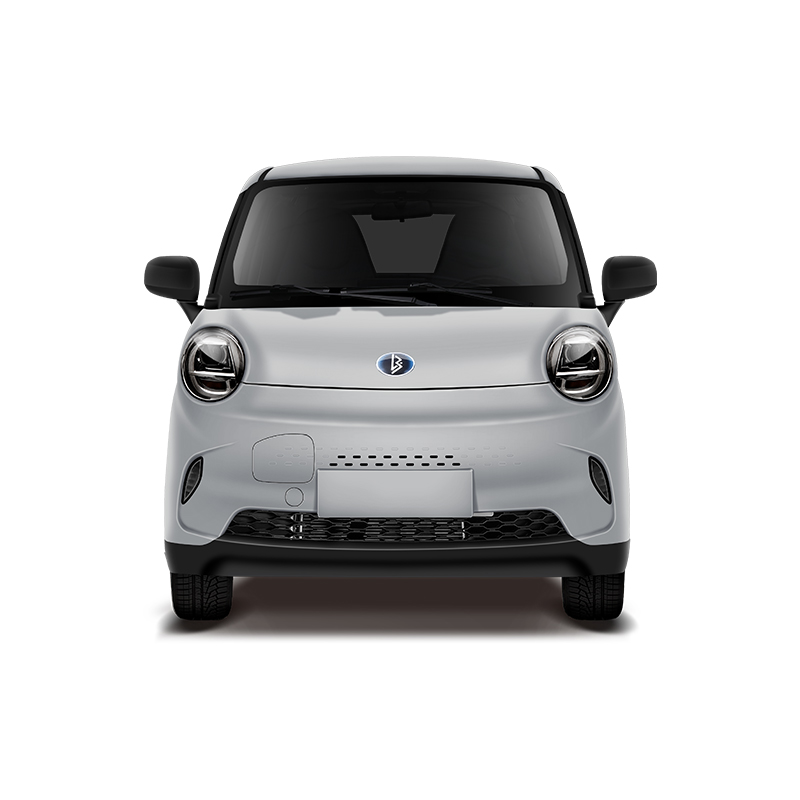
The 140 km electric car thrives in highly predictable environments. It represents the ultimate tool for hyper-local commuting and neighborhood errands. Delivery drivers running fixed-loop operations also benefit immensely from this configuration. You know exactly where the vehicle goes and when it returns.
Cost and efficiency advantages define this category. These models offer the lowest upfront purchase price. They also feature the lightest vehicle weight. Lower mass maximizes urban agility and extends tire life considerably. Furthermore, smaller batteries deliver the fastest full-charge times. You can often replenish them fully using standard domestic electrical outlets overnight.
However, implementation risks are stringent. This capacity offers zero tolerance for unexpected detours. You cannot afford missed charging cycles. The vehicle requires guaranteed access to a dedicated home or depot charger every single night. Missing one charge means the vehicle sits idle the next day.
Choose this tier if your maximum daily driving rarely exceeds 70–80 kilometers. This strict limit leaves a safe, necessary buffer for winter degradation and unexpected delays.
A 220 km electric car serves as the most versatile option for general urban environments. It excels for commuters driving longer suburban-to-urban routes. Localized service professionals, like real estate agents and home healthcare workers, find this capacity perfectly aligned with their varying daily schedules.
This tier hits the operational sweet spot for most urban drivers. It provides enough buffer to occasionally skip a night of home charging. You can absorb heavy winter heating penalties without inducing crippling range anxiety. It grants you flexibility when your daily routine changes unexpectedly.
You must consider a few implementation risks. These models command a marginally higher purchase premium. Depending on your daily usage, you may need to upgrade your home electrical service. Installing a Level 2 (7kW) charger ensures a complete overnight recharge from very low percentages. Standard domestic sockets might fall short if the battery is nearly empty.
Shortlist this capacity if your daily driving averages between 100 and 140 kilometers. It also makes sense if your access to reliable daily charging is occasionally interrupted.
Operations demanding constant motion require substantial energy reserves. The 320 km electric car supports ride-hailing services and multi-shift last-mile delivery routes. It also serves drivers living in severe winter climates who lack reliable home charging access.
The primary advantage is uninterrupted operational uptime. An urban EV fleet benefits heavily from eliminating mid-day charging downtime. High-utilization vehicles can easily complete a full 10-to-12-hour shift without needing public DC fast charging. This keeps drivers on the road earning revenue rather than waiting at charging stations.
Implementation risks center around capital expenditure and physical physics. This tier requires the highest initial investment. The heavier battery pack undeniably reduces overall vehicle efficiency. It consumes a significant portion of the gross vehicle weight, lowering payload capacity. If your vehicle routinely returns to the depot with a 60% charge remaining, you are wasting capital on entirely unused capacity.
Choose this tier if operational uptime is paramount to your success. It perfectly suits daily mileage consistently exceeding 180 kilometers. It remains the best choice when multiple drivers share vehicles across consecutive shifts.
Assess your access to reliable overnight charging honestly. Your infrastructure readiness dictates your optimal battery size. The poorer your access to daily charging, the larger the battery you need. A large battery bridges the gaps between charging sessions. Conversely, guaranteed overnight charging allows you to downsize your battery safely.
Micro vehicles operate under strict Gross Vehicle Weight Rating (GVWR) limits. You face a direct trade-off between energy storage and cargo capacity. Larger batteries consume a significant percentage of this weight allowance. This effectively limits how much cargo or passenger weight you can carry legally and safely.
Range Capability vs Weight Impact Matrix
Advertised Range | Ideal Daily Average | Payload Impact | Primary Use Case |
|---|---|---|---|
140 km | Up to 80 km | Minimal (Maximizes cargo) | Neighborhood routes |
220 km | 100 - 140 km | Moderate | Suburban commuting |
320 km | 180+ km | High (Reduces cargo limits) | Multi-shift operations |
Understanding battery chemistry helps you calculate usable daily distance accurately. Lithium Iron Phosphate (LFP) batteries differ fundamentally from Nickel Manganese Cobalt (NMC) batteries. LFP chemistry tolerates 100% daily charging exceptionally well. This means you can utilize the entire battery capacity safely every day without accelerating degradation. NMC batteries favor the 80/20 charging rule. Knowing which chemistry your vehicle uses drastically alters your usable range calculations.
You must move past guessing and start measuring. Gathering accurate data prevents costly purchasing mistakes. Follow these concrete steps to finalize your decision.
Audit your driving data: Use telematics systems or smartphone GPS data. Calculate your actual average daily mileage over a strict 30-day period. Do not rely on memory or estimates.
Calculate the 30% weather buffer: Identify your absolute maximum daily mileage from the audit. Multiply this number by 1.3. This formula gives you the absolute minimum required real-world range to survive winter driving safely.
Conduct a charging audit: Confirm the exact charging speeds available at your home, depot, or workplace. Ensure the chosen battery capacity can be fully replenished during natural dwell times. Determine if an electrical panel upgrade is mandatory before taking delivery.
Common mistakes occur when buyers assume public fast charging will compensate for poor home infrastructure. Public fast charging degrades battery health faster and costs significantly more per kilowatt-hour.
Finding your ideal vehicle range relies entirely on mathematical calculations. It should never be an emotional choice driven by range anxiety. You must balance your actual daily mileage against your available charging infrastructure. Over-investing in capacity you rarely use drains financial resources unnecessarily. Similarly, under-investing guarantees daily operational bottlenecks.
Buying a 320 km model for a 40 km daily commute represents a clear misallocation of funds. You carry dead weight everywhere you go. Conversely, deploying a 140 km model in a multi-shift commercial fleet guarantees stranded vehicles and lost revenue. Audit your data, calculate your seasonal buffers, and choose the capacity that mathematically supports your daily reality.
A: You generally lose between 20% and 30% of your advertised range during winter months. This loss stems from the energy required to heat the cabin and condition the battery pack. Vehicles utilizing efficient heat pumps lean toward a 20% loss. Vehicles relying on traditional PTC heaters often approach or exceed the 30% reduction mark.
A: No, it is generally insufficient. Micro EVs are aerodynamically optimized for lower urban speeds. Sustained highway driving drains the battery drastically faster than city driving. A 140 km advertised range might drop to 80 km or less at sustained highway speeds, leaving virtually no safety buffer.
A: Yes, it is a crucial factor. All batteries lose capacity over time. Factoring in a 10% to 15% capacity loss over 5 to 7 years is prudent for long-term fleet planning. Buying a slightly larger battery ensures the vehicle still meets your daily mileage requirements five years post-purchase.
A: Generally, yes. Models featuring 220 km and 320 km capacities typically command wider secondary market appeal. Used vehicle buyers naturally worry about battery degradation. A larger initial capacity provides peace of mind, balancing out the higher upfront cost you paid initially.
